When Should a Band Arrive at a Wedding?
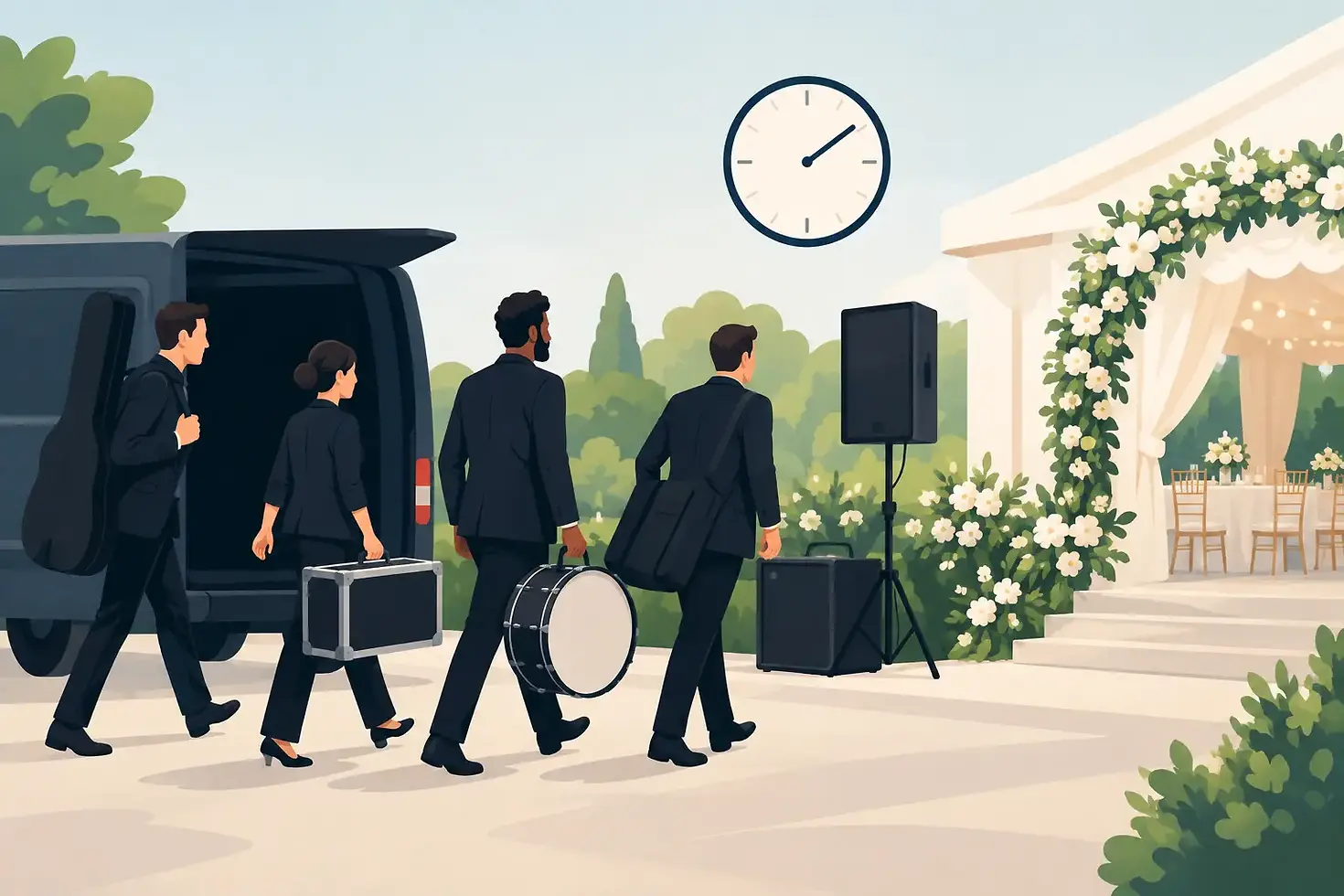
The question of when should band arrive wedding is not a minor logistics detail. It affects whether your first song starts confidently, your emcee can make clear announcements, and your guests walk into a celebration that already feels alive. For most weddings, a professional live band should arrive three to four hours before the first guest is expected. That window gives the team time to load in, set up, test every microphone and instrument, and solve venue issues before they become your problem.
A shorter arrival time can work for a very simple setup. But for a wedding with live music, professional PA sound, multiple performers, an emcee, or a full reception program, early access is the smarter choice. Great entertainment looks effortless because the preparation happens well before anyone takes a seat.
When Should a Band Arrive at a Wedding Reception?
The best arrival time depends on your venue access, band size, equipment needs, and program. As a reliable rule, plan the band’s arrival based on guest arrival time, not your ceremony start time or dinner start time.
If guests begin arriving at 6:30 p.m., ask the band to arrive between 2:30 p.m. and 3:30 p.m. This gives enough time for a complete setup without rushing. The musicians can also be ready to provide background music as guests enter, rather than setting up cables while relatives are taking photos.
For a compact acoustic duo with minimal equipment, two hours may be enough if the venue is easy to access and the stage area is ready. A four- to six-piece live band with drums, keyboards, vocal microphones, speakers, monitors, and an emcee setup will usually need at least three hours. Add more time if the event includes separate ceremony and reception locations, a large ballroom, or complicated vendor access.
Why Early Arrival Makes a Difference
A wedding is a live production, not simply a performance. The music team must coordinate with the venue, banquet manager, wedding planner, photographer, videographer, and sometimes a separate AV team. Each group has a schedule, and delays in one area can affect everyone else.
Early arrival protects your program in several practical ways. The team can find the correct loading bay, move equipment through service elevators, confirm power points, position speakers safely, and test sound levels before guests enter. They can also check wireless microphone frequencies and make sure the emcee can be heard clearly from every table.
This is especially valuable at hotels, restaurants, and event venues with strict loading rules. Some venues allow vendors to use only certain entrances or elevators. Others require equipment to be unloaded within a limited time. A band that arrives with no buffer may lose precious setup time before a single cable is connected.
There is also a guest-experience reason. Nobody wants to hear a drum kit being tested during cocktail hour or see a technician searching for an extension cord while the couple makes their entrance. A prepared band keeps the atmosphere polished from the first welcome drink to the final song.
A Practical Wedding Band Timeline
Every celebration has its own pace, but this schedule works well for many receptions:
Three to four hours before guest arrival: Band arrives, unloads equipment, and completes initial setup.
Two hours before guest arrival: Full soundcheck, microphone testing, and coordination with the venue or planner.
One hour before guest arrival: Final volume adjustments, set list review, and readiness for background music.
Thirty minutes before guest arrival: The stage should look clean, the sound should be ready, and the team should be in position.
The goal is not to fill every minute with work. It is to create breathing room. If traffic is heavy, a loading area is busy, or the ballroom is not released on time, the event can still proceed without panic.
Factors That Can Change the Arrival Time
Some weddings need more than the standard three-hour window. A professional entertainment provider should ask the right questions before confirming the timeline.
Venue Access and Parking
A ballroom on an upper floor, a venue inside a shopping complex, or a location with limited parking may add significant setup time. Large equipment cases, speakers, keyboards, and drums cannot always be carried directly from a vehicle to the stage. Confirm where the band can park, which entrance to use, and whether there is a freight elevator.
Ceremony and Reception in Different Spaces
If the band is providing music for both the ceremony and reception, allow extra time. Moving from a garden ceremony area to an indoor ballroom is not an instant transition. The team may need duplicate equipment, additional crew, or a planned changeover period.
For this type of wedding, the band may arrive four to five hours before the ceremony. That allows the ceremony sound system to be tested without compromising reception setup.
Emcee and PA Requirements
A band that also provides emcee services and a professional PA system has more responsibility than a group hired only to perform a few songs. The team must prepare microphones for speeches, cue entrance music, manage background tracks, and support announcements throughout the night.
This is where a one-stop entertainment provider offers a real advantage. Instead of several vendors troubleshooting separate systems, one experienced team can manage the music, hosting, and sound plan as one coordinated service. The Wedding Serenata plans these details carefully so couples can focus on their guests, not the technical schedule.
Cultural Traditions and a Full Program
Multicultural weddings often have more program segments: family entrances, tea ceremonies, toasts, games, video presentations, special performances, and multiple language announcements. These moments need music cues and reliable microphones. The more moving parts you have, the more valuable early setup becomes.
Give the band a final program rundown in advance, including names, pronunciation notes, timing for march-ins, and any songs that must be played at a specific moment. A skilled emcee and band can adapt on the day, but clear information helps them deliver a sharper performance.
What Couples Should Confirm Before the Wedding
You do not need to become an event producer. A few direct questions will prevent most timing problems. Ask your band how long they need for load-in, setup, and soundcheck. Then ask your venue when vendors can access the space and whether there are restrictions on noise testing.
Also confirm the stage location, power availability, parking instructions, meal arrangements, and the name of the onsite coordinator. If speeches or games are planned, clarify who controls the running order. A band cannot keep a reception flowing if they receive major schedule changes only minutes before an entrance.
It is wise to build a buffer into the overall program as well. Wedding schedules often shift because of traffic, photo sessions, late guests, or extended greetings. A confident live band can adjust the music and keep the room engaged, but preparation gives them the freedom to adapt without sacrificing quality.
Do Not Treat Soundcheck as Optional
Soundcheck is where professional entertainment separates itself from a last-minute setup. It is not just about checking whether the speakers turn on. The team balances vocal levels, instruments, backing tracks, microphones, and room acoustics so the music feels energetic without overwhelming conversations.
A good soundcheck also identifies feedback risks, dead wireless microphone batteries, unclear speech levels, and difficult stage positions. These are small issues when caught early. They are distracting when discovered halfway through a speech.
If your venue does not allow a loud soundcheck before guests arrive, the band can still complete a controlled line check and make final adjustments during a quiet moment. Tell them the venue’s sound policy early so they can plan properly.
The Best Rule for a Stress-Free Celebration
When deciding when a band should arrive at your wedding, choose the timeline that gives the team time to be fully ready before your first guest walks in. For most full-service wedding bands, that means three to four hours early, with additional time for complex venues, ceremonies, or larger production needs.
Your entertainment should never feel like a last-minute gamble. Give your band the access, information, and preparation time they need, and they can do what they were hired to do: fill the room with great music, guide the energy of the celebration, and help every important moment land exactly as it should.



Comments