Why a Multilingual Wedding Singer Matters
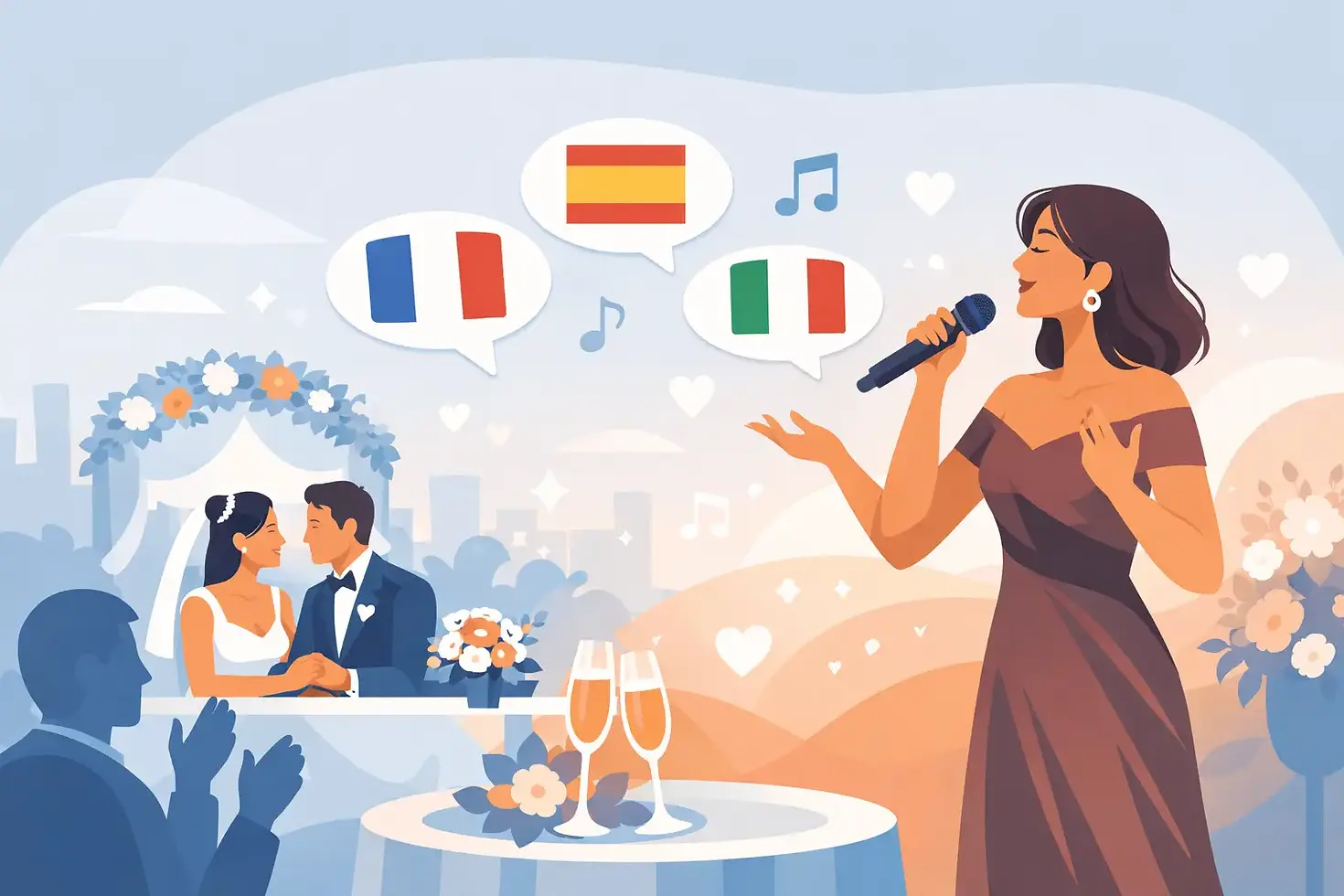
One table is requesting an English love ballad. Another lights up the moment they hear Mandarin classics. The older guests respond to familiar dialect songs, while your friends want upbeat pop later in the night. This is exactly where a multilingual wedding singer makes a real difference - not as a novelty, but as a practical advantage that keeps a wedding connected from start to finish.
In Singapore, weddings rarely serve just one type of guest. You may have relatives who are most comfortable in Mandarin, English-speaking colleagues, older family members who enjoy dialect favorites, and friends who want current chart hits. A strong singer who can perform across languages helps the room feel united. More importantly, it reduces the risk of awkward gaps where part of the audience feels left out.
This matters because wedding entertainment is not only about singing well. It is about reading the room, keeping momentum, and creating moments that feel personal. When language is part of your guest mix, song choice becomes part of guest care.
What a multilingual wedding singer actually brings to a wedding
A multilingual wedding singer does more than pronounce lyrics in different languages. The real value is flexibility. Your event is full of transitions - guest arrival, march-in, champagne pop, dinner, speeches, toasts, and the livelier segment later in the night. Each part of the program may call for a different energy level and a different audience focus.
A singer who handles multiple languages well can shift the mood without making the entertainment feel disjointed. During the reception, they can keep things elegant and easy. When it is time to engage the crowd, they can move into songs that different groups instantly recognize. That range helps the event feel intentional instead of random.
There is also a trust factor. Couples want fewer worries on the wedding day. If your live entertainment can naturally serve a diverse room, you are not forced to over-explain your guest profile or micromanage every song decision. An experienced performer already understands how to build a set that works for mixed audiences.
Why this matters more for multicultural guest lists
Many couples assume a bilingual or multilingual singer is only necessary if they are planning a heavily cultural program. In reality, even a fairly modern wedding can benefit from it. The issue is not whether every guest needs songs in their preferred language. The issue is whether your entertainment can make the widest possible group feel seen.
That is especially true when families from different backgrounds are meeting each other. Weddings are one of the few events where generations, friend groups, and work circles all share one room for several hours. A narrow music set may please one section of the audience while leaving others passive. A broader set, delivered with confidence, keeps participation stronger across the board.
It also helps with emotional moments. A first dance in English may suit the couple perfectly, while a parent dedication song in Mandarin may mean more to family. Those choices make the program feel personal. They show thought, respect, and maturity in planning.
Choosing the right multilingual wedding singer
Not every singer with a long song list is the right fit. Language ability on paper is not the same as live event ability. What you want is a performer who can carry the room, not just cover songs.
Look for natural delivery, not just language claims
A singer may technically know songs in several languages, but delivery matters. Guests can hear when a song sounds practiced and authentic versus memorized phonetically. For weddings, that difference is important because the performance has to feel polished and sincere.
Ask what languages they perform regularly, not occasionally. There is a big difference between offering one or two songs on request and being able to confidently build whole segments around those languages.
Prioritize event experience
A strong wedding singer understands pacing. They know when to stay subtle and when to lift the room. They know how to support formal moments without overpowering them. They also know that weddings are live productions, not studio sessions. Timing shifts. Speeches run long. March-ins start late. An experienced performer adjusts without losing control of the atmosphere.
This is one reason couples often prefer a team that can handle live music, emcee coordination, and sound together. When those pieces are managed under one roof, the event runs cleaner and the entertainment feels more consistent.
Ask about audience range
Multilingual ability is most useful when paired with repertoire range. If your singer can perform English, Mandarin, and Malay songs but only in one slow-ballad style, that still limits the event. The better choice is someone who can move across romantic songs, light jazz, pop, dinner music, and crowd-friendly favorites in multiple languages.
That variety gives you more control over the guest experience. It also makes your program feel balanced instead of repetitive.
The role of live music versus a playlist
A playlist can cover multiple languages, but it cannot respond in real time. That is the biggest difference. A live singer can sense when the room needs warmth, elegance, or energy. They can adjust the tempo, switch songs, and create a more personal connection with guests.
For weddings, that responsiveness is valuable. If your older relatives are visibly enjoying a familiar classic, a skilled singer can extend that engagement. If the room is getting quiet during dinner, they can lift it slightly without turning the event into a concert. If guests are ready for a stronger party mood, they can build into it naturally.
There is still a trade-off, of course. Live entertainment generally costs more than running a background playlist. But couples who choose live music are usually paying for more than songs. They are paying for atmosphere, timing, professionalism, and the ability to adapt under pressure.
How multilingual singing supports the emcee flow
The best wedding entertainment does not operate in isolation. Music, announcements, and sound all affect each other. When your singer or entertainment team understands multilingual delivery, the entire program becomes smoother.
That can mean introducing key moments in the appropriate language, pronouncing names correctly, or keeping both families engaged during formal segments. It can also mean knowing when a brief bilingual touch is enough and when a fuller multilingual approach is needed.
This is where one-stop providers stand out. If your live band, emcee, and PA sound system are coordinated by the same experienced team, there is less room for confusion. The result is a celebration that feels organized, polished, and easier for the couple to enjoy.
When a multilingual wedding singer is essential and when it is optional
Sometimes this choice is clearly essential. If your guest list includes multiple language groups, if family expectations are culturally specific, or if you want certain songs in different languages for major moments, then multilingual capability should be high on your checklist.
In other cases, it is more of a strong advantage than a strict requirement. For example, if most of your guests are comfortable in English but you want to include a few meaningful songs for parents or grandparents, a multilingual singer still adds value. The key is matching the performer to the actual room, not booking based on a label alone.
That is also why couples should avoid overcomplicating things. You do not need a singer who does everything. You need one who covers your priorities with confidence and knows how to deliver them live.
What couples in Singapore usually care about most
For most engaged couples, the real concerns are simple. Will the singer sound good live? Will guests enjoy the program? Will the entertainment provider be dependable? And will the whole setup run smoothly without last-minute stress?
A multilingual wedding singer supports all of those concerns when backed by proper experience. It is not just about versatility for marketing. It is about making sure the event feels inclusive, the transitions stay smooth, and the music serves the audience you actually invited.
That is why couples often look for providers who can cover more than one need at once. A reliable team with proven live performance ability, emcee support, and professional sound setup saves time in planning and reduces risk on the day itself. For clients who want quality without juggling multiple vendors, that convenience matters.
At The Wedding Serenata, that practical approach is exactly the point. Couples want live entertainment that sounds polished, fits a multicultural crowd, and keeps the wedding moving with confidence.
The right singer does not just fill the room with music. They help every table feel part of the same celebration, and that is what guests remember long after the last song ends.


Comments